Article
IIoT Guide for Modern Industrial Transformation Leaders
What is IIoT
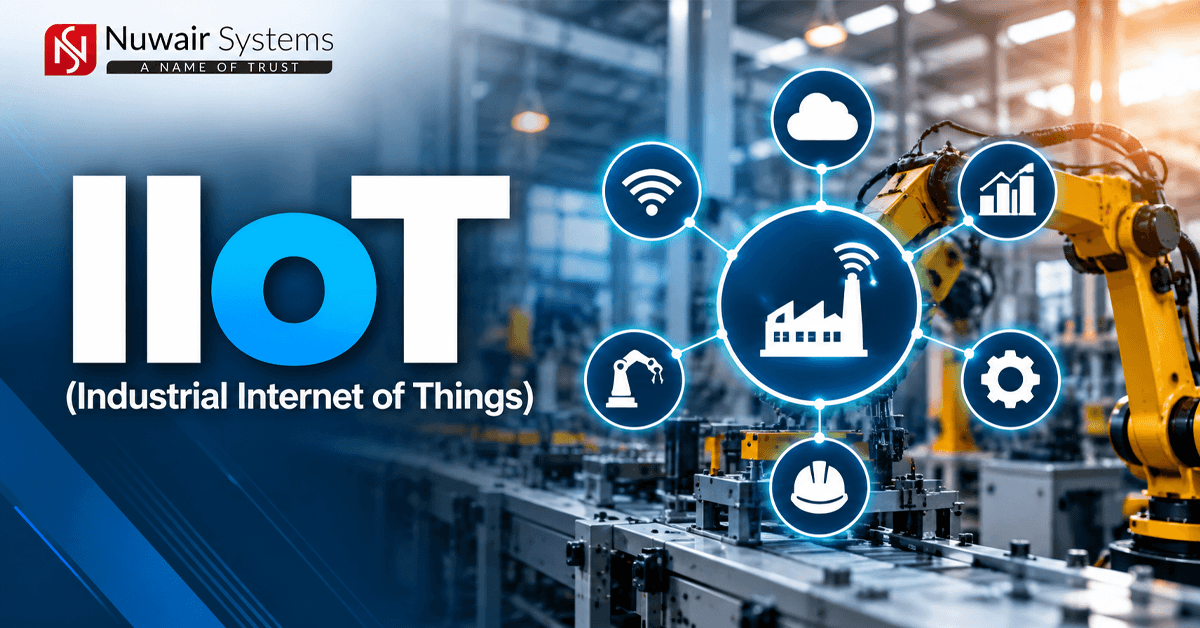
This IIoT guide starts with the basic distinction that trips up a lot of first-time researchers: the Industrial Internet of Things is not the same as consumer IoT. Where consumer IoT connects smart speakers and thermostats, IIoT connects industrial assets, machinery, production lines, vehicles, warehouses, and inventory systems using embedded sensors and software to capture and exchange operational data in real time. It takes traditional IT and operational technology (OT), historically run as separate systems, and brings them under a single, unified platform for complete visibility across a manufacturing enterprise.
This isn't a niche or experimental technology anymore. Nearly half of large manufacturing organizations have already implemented IIoT solutions, and most of the rest are actively developing or expanding their strategies. IIoT has become a foundational part of how modern manufacturing operates, not an optional pilot project.
How IIoT Works: From Sensor to Insight
• Edge sensors are embedded in machinery and equipment, capturing real-time data on temperature, vibration, output, location, and more.
• Industrial gateways aggregate this sensor data and transmit it onward, either processed locally (edge computing) or sent to a cloud-based platform.
• Analytics engines process the incoming data, sometimes millions of data points, to identify patterns, predict equipment failures, and recommend optimizations.
• Insights flow back to both the shop floor (real-time alerts, automated workload redistribution) and the executive suite (dashboards, KPIs, ROI tracking), closing the loop between operations and decision-making.
The Core Business Benefits
• Predictive maintenance: forecasting equipment failures before they happen, preventing the unplanned downtime that halts entire production lines.
• Real-time visibility: responding immediately to quality deviations or equipment issues before they cascade into larger, costlier problems.
• Reduced manual intervention: process automation cuts labor costs while improving consistency and reducing human error.
• Improved worker safety: wearable IoT devices and collision-detection sensors help track worker health, location, and hazard exposure in real time.
• Supply chain visibility: end-to-end tracking of inventory and materials across the manufacturing supply chain.
• Adaptive, data-driven operations: instead of machines running fixed routines, connected systems adjust dynamically based on real-time conditions, redistributing workload automatically if one machine underperforms.
Real-World Use Cases
• Automated quality assurance: remote, continuous monitoring that catches defects and inconsistencies faster than manual inspection.
• Fleet and asset tracking: real-time location and condition monitoring for industrial vehicles and mobile equipment, including collision-avoidance systems that improve on-site safety.
• Digital twins: virtual replicas of physical production lines used to simulate changes and optimize processes before implementing them on the actual factory floor.
• Connected products enabling new revenue models through remote diagnostics, usage-based services, and predictive warranty management.
• Multi-site standardization enables faster, safer rollout of applications and process changes across multiple production lines or facilities simultaneously.
The Biggest Adoption Challenges
• Brownfield integration: most factories run legacy equipment with no native connectivity, requiring retrofit sensors and protocol converters rather than a clean-slate build.
• Data silos: different systems using incompatible formats prevent unified analytics that deliver value, leaving IIoT projects stuck generating disconnected reports instead of real insight.
• Bandwidth and network speed: real-time applications and edge computing depend on reliable, high-throughput connectivity across the facility, which many older sites weren't built for.
• Security exposure: connecting previously isolated OT systems to broader IT networks introduces new attack surface that requires dedicated industrial security practices, not just standard IT security.
• Pilot purgatory: without a structured deployment framework, many well-intentioned IIoT initiatives stall at the proof-of-concept stage and never scale across the organization.
Is IIoT Realistic for Small and Mid-Size Manufacturers?
Yes — and this is one of the more significant shifts in the space over the past few years. IIoT scales down as readily as it scales up: cloud-based platforms and increasingly affordable sensors mean smaller manufacturers can adopt IIoT without the large upfront capital investment that once made it an enterprise-only technology. A smaller operation doesn't need to instrument an entire facility on day one; starting with a single high-value use case, like predictive maintenance on your most critical equipment, is a realistic and common entry point.
How to Start an IIoT Implementation
• Identifying one high-value use case, predictive maintenance on critical machinery, is a common, fast-ROI starting point.
• Assess your legacy equipment for connectivity gaps and plan for retrofit sensors where needed.
• Choose between edge, cloud, or hybrid processing based on your latency and bandwidth constraints.
• Build security into the design from day one; OT/IT convergence needs its own security framework, not a bolt-on afterward.
• Pilot on one line or site, prove the ROI, then use a structured deployment framework to scale rather than repeating the pilot from scratch elsewhere.
4. Frequently Asked Questions
What is IIoT?
The Industrial Internet of Things is a system of connected industrial assets, sensors, and software that capture and exchange operational data in real time to improve manufacturing processes.
How is IIoT different from consumer IoT?
IIoT connects industrial assets like machinery and production lines rather than consumer devices, and typically demands higher reliability, security, and integration with operational technology (OT) systems.
What are the main benefits of IIoT for manufacturers?
Predictive maintenance, real-time production visibility, reduced manual intervention, improved worker safety, and better supply chain tracking are the most cited benefits.
How much does it cost to implement IIoT?
Costs vary widely based on facility size and scope, but falling sensor costs and cloud-based platforms have made starting with a single, focused use case increasingly affordable even for smaller manufacturers.
Can small and mid-size manufacturers afford IIoT?
Yes — cloud-based solutions and cheaper sensors mean IIoT can scale down to smaller operations without the large upfront investment it once required.
What is predictive maintenance and how does IIoT enable it?
Predictive maintenance uses sensor data and analytics to forecast equipment failures before they occur, allowing repairs to be scheduled proactively instead of reacting to unplanned breakdowns.
What are the biggest challenges in IIoT adoption?
Integrating legacy equipment lacking native connectivity, resolving data silos between incompatible systems, and building adequate network bandwidth and security are the most common obstacles.
How do you integrate IIoT with legacy equipment?
Through retrofit sensors and protocol converters that add connectivity to existing machinery without requiring a full equipment replacement.
Is IIoT secure enough for industrial control systems?
It can be, but only with a dedicated industrial security approach; connecting OT systems to broader networks introduces new risks that standard IT security practices alone don't fully address.
What's the difference between edge computing and cloud in IIoT?
Edge computing processes sensor data locally for faster response times, while cloud processing centralizes data for broader analytics. Many IIoT deployments use a hybrid of both.
What is a digital twin in manufacturing?
A virtual replica of a physical production line or asset, used to simulate and test changes before implementing them on the actual factory floor.
How does IIoT improve worker safety?
Wearable IoT devices and sensors can track worker location and health conditions in hazardous environments, and collision-detection systems can prevent accidents involving industrial vehicles.
Conclusion
IIoT has moved from experimental pilot to foundational infrastructure for manufacturers competing on efficiency, quality, and safety, and it's no longer priced out of reach for smaller operations. The organizations getting real value aren't the ones instrumenting an entire facility overnight; they're the ones starting with one high-value use case, proving the ROI, and scaling deliberately from there with security built in from the start.
Considering an IIoT initiative for your facility? Nuwair Systems helps industrial teams design secure, scalable connected operations from pilot to full rollout. Get in touch for a free consultation.