E-commerce Hosting C...
E-commerce Hosting Cost Breakdown for Small Businesses
E-commerce Hosting Cost Breakdown for Small Businesses
Nowadays, many small businesses are creating e-commerce websites to sell their products and services online. Having a good website is very important to start an online business, and web hosting is required to run a website. Web hosting is the service where all the files and data of the website are stored so that people can view the website at any time through the internet.
But when a small business thinks of creating an e-commerce website, the question that comes to their mind is how much it will cost. Actually, the cost of e-commerce hosting does not depend on one thing but on many different things. These include the domain, hosting plan, security, platform, and other features.
Cost of Domain Name
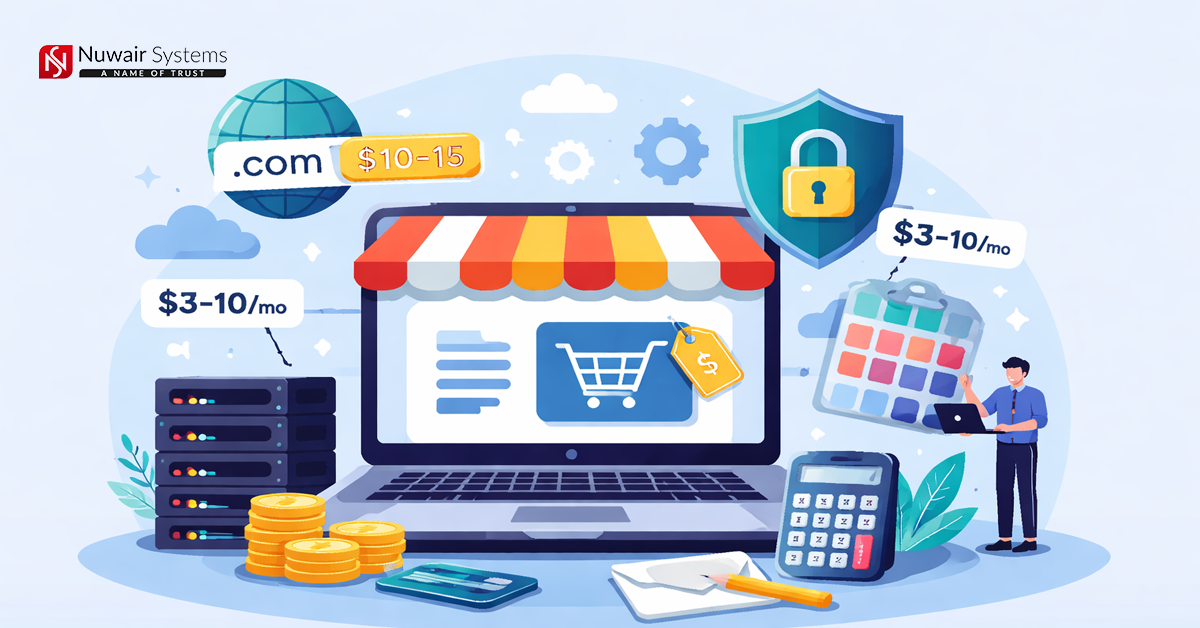
The first thing that is needed for any website is a domain name. A domain is actually the name or address of the website that people type in the browser to reach the website. For example, domains like .com, .net or .org are commonly used. When a business creates its website, it has to buy a domain. Usually, a domain costs around $10 to $15 per year. In Pakistani rupees, this works out to around Rs. 3000 to 4500. Some web hosting companies also provide a domain for free for the first year with their package.
Web Hosting Plan Cost
After the domain, the most important thing is web hosting. Hosting is where the website data is stored. There are different types of hosting available in the market and each one has a different price. Most small businesses initially use shared hosting because it is cheaper. It usually costs around $3 to $10 per month. If the website starts getting a lot of traffic, VPS hosting becomes a better option, which can cost around $20 to $60 per month. Apart from this, there is also cloud hosting, which is used for large and busy websites.
SSL Certificate Cost
Security is very important in e-commerce websites because users provide their personal information and payment details on the website. That is why SSL certificates are used. SSL certificates secure the website and also display a lock icon in the browser, which gives users confidence that the website is safe. Several web hosting firms include free SSL as part of their package offerings. But if a company wants to increase their level of protection, they also have the option to purchase premium SSL, which can cost anywhere from $20 to $200 each year.
E-commerce platform fees
To create an online store, it is also necessary to use an e-commerce platform. There are various platforms that make online business easier. For example, WooCommerce, Shopify, and Magento are quite popular platforms. WooCommerce is used by most people because it is basically free and works easily with WordPress. However, some of its additional plugins or themes may have to be purchased. Shopify, on the other hand, is a complete platform with fees starting at around $29 per month.
Website Design and Theme Cost
A good e-commerce website also requires a beautiful and simple design. Good design makes it easy for users to use the website and improves the shopping experience. There are also many free themes on the internet that can be used to create a website without spending money. But if a business wants a more professional design, it can purchase a premium theme, which usually costs between $30 and $100. In addition, some individuals choose to have their website developed by a developer, which can result in an increase in expenses.
Additional Plugins and Features
E-commerce websites often require some additional features. For example, payment gateways, security plugins, backup systems, and SEO tools. These features make the website more secure and better. Some plugins are free, but many important plugins have to be purchased. Usually, their cost can range from about $50 to $300 per year.
Maintenance and Backup Costs
Website backups and maintenance are necessary for long-term use. Keeping a website updated, secure, and working well is website maintenance. Having a backup protects and restores website data in the event of a malfunction. Some hosting companies provide this service for free, while in some cases, a separate fee has to be paid for it.
Conclusion
If we look at it as a whole, the cost of creating and running an e-commerce website consists of various things. Domain, hosting, security, platform, design, and additional features are all part of it. If small businesses plan properly, they can create a good e-commerce website even on a low budget and successfully advance their business online.