Outdated SEO Backlin...
Outdated SEO Backlink Strategies Vs Updated SEO Backlink Strategies
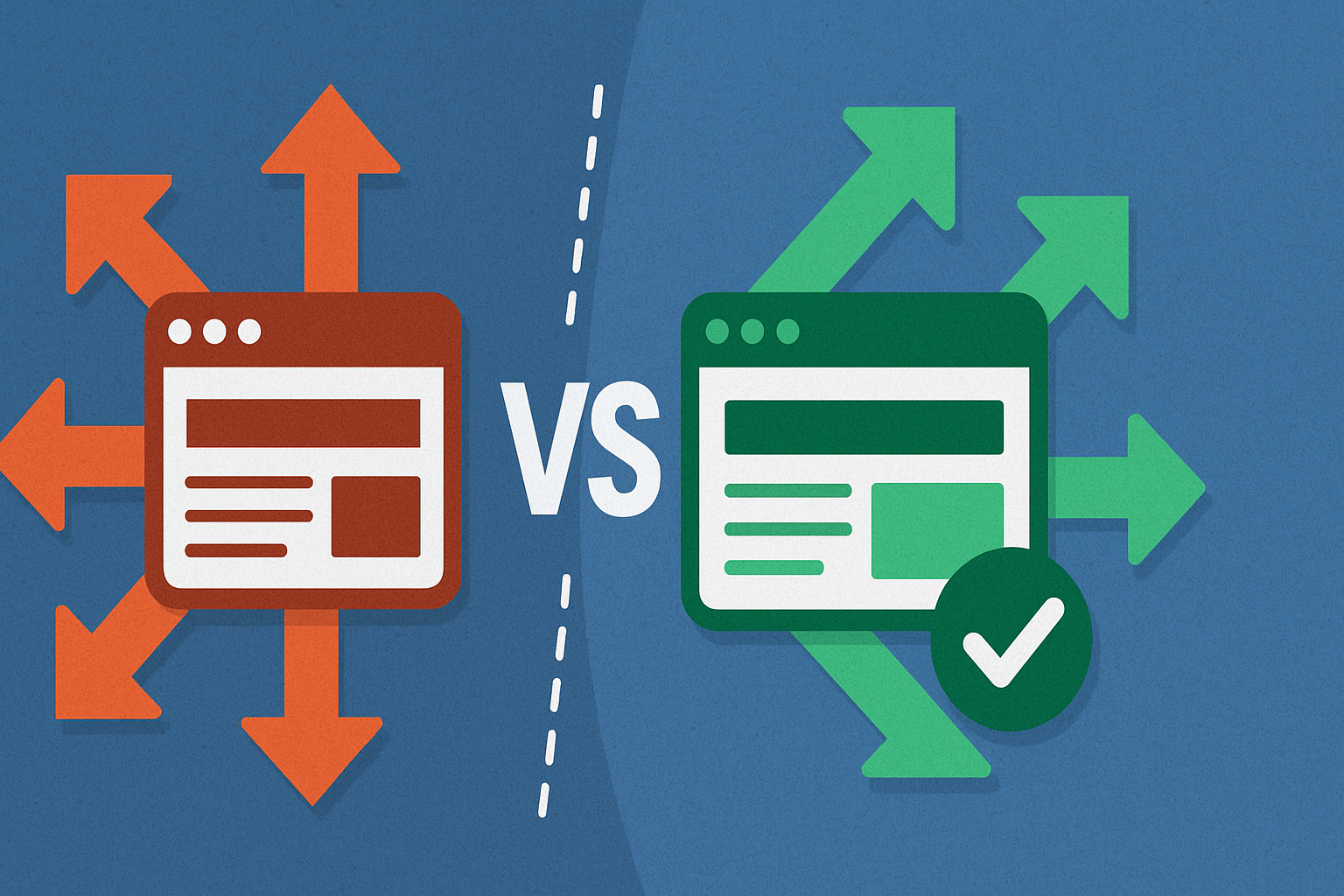
Outdated SEO Backlink Strategies Vs Updated SEO Backlink Strategies
Search Engine Optimization (SEO) has always been based on getting backlinks, but the ways to get them have changed a lot in recent years. In the early days of the internet, it was like the wild west in the digital world. Simpler search engines were easily beaten by tricks that focused on numbers. Search engines like Google are now very advanced systems driven by AI that put quality, usefulness, and human value above all else. There is now a clear separation between old methods. That hurt a website’s reputation, and new methods that build real, long-lasting influence. This change is not only helpful but also necessary for anyone who wants to do well in the digital world of today.
This article will break down this development very carefully. First, we will look at the graveyard of old SEO backlink tactics and explain why each one is dangerous and no longer useful. Then, we’ll give full guidance on the most up-to-date, honest, and effective SEO techniques available today. This will make sure that efforts build a base for long-term growth instead of an impending penalty.

Outdated SEO Backlink Strategies
1)-Mass Low-Quality Guest Posting
Mass low-quality guest writing is a bad example of a strategy that is used to works. As part of this approach, send thousands of templated emails to blogs with low authority, giving fake or general content just to get a backlink. The content is useless for readers, and the sites that put it out are often just “link farms” that don’t have any real readers and were only made for link exchanges.
The issue now is that Google’s algorithms, like Panda and the AI-powered Spam Brain, are made to find and discount these kinds of link scams. By using this approach, a company is now linked to spammy, low-trust websites. The links site get are probably worth less, and if site do this enough times, it can lead to a human punishment that is hard to recover from and takes too much time, for little gain.
2)-PBN Networks
A Private Blog Network (PBN) is a group of websites that are all owned by the same person or group and are only used to build fake links to a main “money site.” These networks often use defunct names that still have some power to make it look like they are real, but the content on those domains is usually not very valuable and is only there to house links.
Google’s Webmaster Guidelines are clearly broken by this plan. Google is always looking for signs of PBNs, like shared servers, tracking IDs, and design themes. PBNs can be very complicated. Google can punish the money site by de-indexing the whole network. This will take it out of search results and undo all your SEO work.
3)-Reciprocal Link Exchanges
Systematic reciprocal link exchanges—the I’ll link to you if you link to me agreement—were common early web practice. While a few natural, relevant reciprocal links are harmless, the large-scale, systematic trading of links is now a clear red flag for search engines.
The core issue is that these exchanges are rarely natural or contextually relevant. Google’s PageRank system is made to find and ignore these kinds of misleading link trends. When a computer sees a group of sites linking to each other, it lowers the value of those links. Too many mutual links can cause a program to block them out or a person to punish them for using an inappropriate link scheme.
4)-Comment Spam
Comment spam is the practice of posting links in blog or forum comments with optimized anchor text, often disguised as a generic compliment. This is one of the most brazen and least effective tactics, relying on volume over any semblance of quality.
In the modern web, this strategy is utterly futile.
Nearly all major blogging platforms automatically add a rel=”no follow” attribute to comment links, meaning they pass no SEO value (PageRank). This might only work on trash blogs that aren’t monitored and don’t get a lot of visitors. These blogs don’t offer any authority and will only make people link your brand with digital garbage, which is bad for your image.
5)-Exact-Match Anchor Text Overuse
Anchor text is the text that links to other pages. In the past, the fastest way to get to the top of search results was to use your exact target term as the anchor text for every link. For example, SEOs would work hard to get links with perfect-match anchors like “best running shoes” to the page that was relevant to them.
This kind of over-optimization is now a common way for Google’s Penguin system to find bad sites. There is a mix of brand names, URLs, and general words in a natural connection profile. Google thinks that a profile full of exact-match anchors is an attempt to trick them, so those links are downgraded, and your results often drop significantly for the terms you were trying to target.
6)-Sitewide Footer Links
This strategy involved getting a server to put your link in the website’s bottom or sidebar on every page. An appealing feature was that a single payment could get thousands of links from a single site, making a link signal that looked strong but wasn’t real.
Google’s algorithms easily identify this unnatural pattern. A genuine, editorially given link is placed contextually within a piece of content. A link that appears on a site’s contact page, privacy policy, and every blog post in between is clearly not based on merit. As a result, these sitewide links are heavily discounted, and if done with optimized anchor text, they can contribute to a Penguin penalty.
7)-Article Directories
In the past, many sites were popular places to post articles that linked back to your own. The idea behind these sites was to help with SEO and get more publicity, but they quickly became full of low-quality, duplicate, and spun material.
Google’s Panda update went after these places with little or no content, destroying their ranks and, by extension, the worth of any links that came from them. A link from an article index isn’t worth much these days. When you submit your content to these sites, search engines may think of it as spam, which can hurt the general quality of your site.
Updated SEO Backlink Strategies
1)-Topical Authority Backlinks
When you create topical authority, your objective is to become the acknowledged authority on a certain subject cluster. It will result in the natural accumulation of relevant connections. When you construct a full ecosystem of material that covers a subject in depth. It eliminates the need to chase individual links for a single term. Creating a primary pillar page that offers a high-level overview and is supplemented by more comprehensive cluster material that investigates subtopics is what is required to accomplish this.
The reason why this method is successful is that it is in line with the natural way in which individuals relate to resources. Additional websites, journalists, and bloggers will credit you as the major source of information. When you have the most comprehensive and authoritative material on a certain topic. As a result of the true worth and comprehensiveness of your material, rather than being a result of manipulation. And the links that you get are of a high quality, contextually relevant, and sustainable.
2)-User-Generated Backlinks
Backlinks from other users are one of the best ways to tell if a product, service, or piece of content is truly great. These are links that your customers, fans, and users make on their own, without being told to do so anywhere else. Along with being made of only natural materials, the fact that they are a powerful sign of trust and happiness adds to their huge value.
If you want to make these links, you will need to create “linkable assets.” An amazing product that people easily review, a free and useful tool or template that solves a common problem, or unique content that makes people want to share are all examples of this type of situation. Building a passive, real backlink profile that search engines really value. It can be done by focusing on making things that people want to talk about and link to.
3)-Brand Mentions with Implied Links
There are many instances in which someone may discuss your product, reference your study, or mention your brand on the internet without referring to your website. Google’s algorithms have reached a level of sophistication that allows them to recognize. These unlinked brand references as a signal of authority and are considered as implied links.
Management of one’s reputation in a proactive manner is the approach here. To keep an eye out for these brand citations on the internet, use tools such as Google Alerts. The business site should make a courteous approach to the author or webmaster. If you come across a mention that does not have a link to it. And you express your gratitude to them for the mention and respectfully advise. That including a link would be of further use to the people who read their work. The fact that you are assisting them in enhancing their own content contributes to the very high success rate of this strategy.
4)-Podcast Appearances
By appearing as a guest on podcasts that are linked to your sector, you may position yourself as an expert in your field and get links, which is one of the most successful strategies. Because of this, you will have the option to communicate with a well-established and trustworthy audience. That is in accordance with your target market, which will provide you with instant exposure and credibility.
An advantage in terms of backlinks may be attributed to the show notes. It is often provided in practically every podcast. You will find links to the guest’s website as well as additional resources inside these show notes. Because it originates from a domain that is well-known domain. This provides a link that is of high quality and provides useful information. Additionally, the content of the podcast episode itself may be repurposed into a blog post or transcript. Therefore, providing an additional asset on your own website has the potential to attract additional links. This can be done in several ways.
5)-Data-Driven Original Research
Original research and data that are not found anywhere else are two of the most significant assets in the current link-building process. There is a perpetual need for new and reliable data to support the information that journalists, bloggers, and academics produce. By carrying out your own surveys, doing a fresh analysis of public data, or producing an exhaustive State of the Industry report, you can build a reliable resource.
Because you are providing something valuable—exclusive information—the outreach procedure for this method is essentially simpler. Promotion of your results may be accomplished via the use of platforms. Such as HARO (Help a Reporter Out) or by directly pitching newspapers that are pertinent to the topic. Establishing your website as a data-driven authority is made possible. When your data is quoted, it results in high-authority backlinks from industry blogs and news websites.
6)-Broken Link Building with Added Value
Building broken links is a tried-and-true white-hat strategy. That continues to be very successful since it offers webmasters a real service. The procedure entails locating broken links, also known as 404 errors, on websites. And it is relevant and has a high level of authority, generally on their resource pages.
Providing a greater resource rather than just a substitute for the broken connection is the most important factor. That sets the current method apart from other approaches. A user develops a piece of information that is superior to the original. In terms of its comprehensiveness, up-to-datedness, and value. After that, you contact the webmaster, kindly advise them. The link is broken, and provide them with a better resource as a substitute. By resolving an issue for them, this increases the likelihood that they will provide you with access to the link.
7)-Strategic Collaborative Content
This technique aims to go beyond basic guest blogging and build genuine connections that benefit both parties. It involves collaborating with another company, influencer, or expert in your field to create a meaningful piece of content. Examples of collaborative projects include producing a comprehensive expert roundup, co-authoring a research study, or hosting a joint webinar. Through this collaboration, you can combine resources, audiences, and expertise. Once the content is published, both parties will promote it to their respective audiences. That effectively doubles the reach of the content. This cross-promotion can lead to an increase in high-quality backlinks from various relevant sites in your industry. As well as a wider distribution of the material.
Conclusion
The transition from outdated to updated backlink strategies involves moving from manipulation to genuine value creation. Older techniques were a short-term gamble that addressed the symptom—a lack of links. Rather than the root problem, which is a lack of authority. In contrast, modern strategies represent a long-term investment in your brand’s digital presence. It fosters trust with both users and search engines.
By leaving behind the obsolete tactics of the past and fully embracing approaches. That focus on topical authority, collaboration, and value creation. A site can develop a backlink profile that is not only resilient to algorithm updates. But also essential for establishing a respected and successful online presence. Instead of chasing links, focus on earning them.