Drive Targeted Traff...
Drive Targeted Traffic with Search Marketing Services
Drive Targeted Traffic with Search Marketing Services
In this digital age, business visibility is everything for sales. To appear online is not enough for sales. Business advertising in front of the right audience at the right time, with the right message, helps every business drive sales and generate revenue. With the strategy of SEO and Pay-per-click advertising, businesses can attract high-intent users who search for their products or services. Digital marketing is not about generating clicks. It is always about driving targeted traffic that converts into customers’ sales and earns sustainable revenue. In this article, we will discuss how search marketing services work, why they are essential, and how they can transform digital presence.
What are Search Marketing Services?
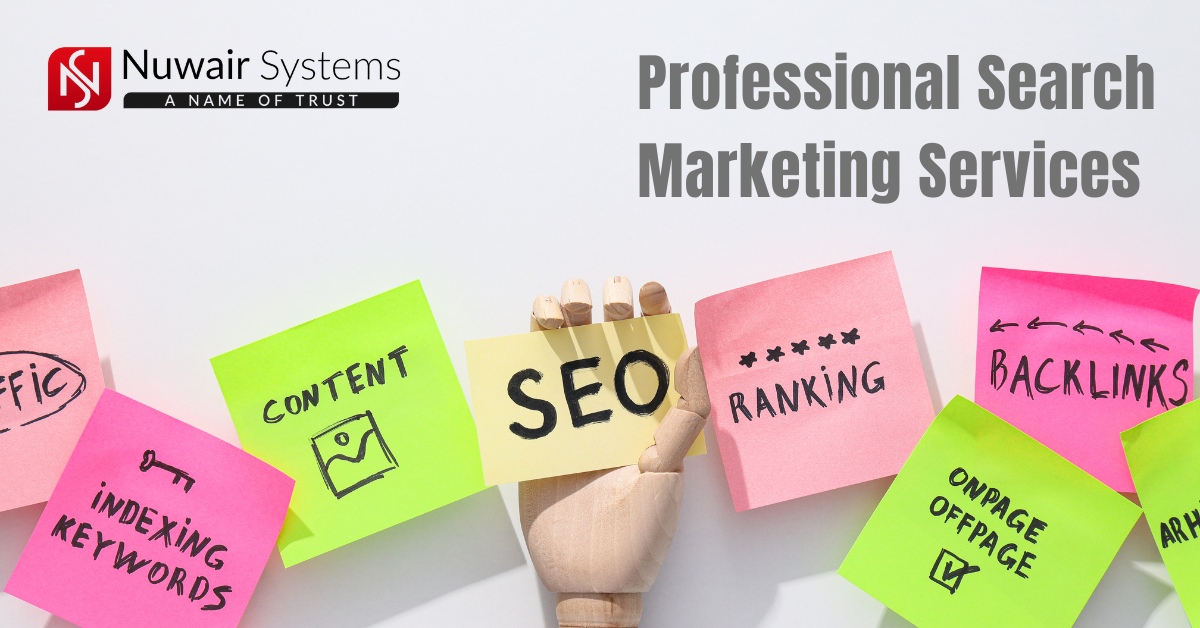
Search marketing services are the foundation for all business activities aimed at increasing website visibility in search engine results pages (SERPs). That encompasses both organic for visibility and paid efforts for sales through PPC or other platform advertising services. In this scenario goal is simple to connect with users at the precise moment they express their intent through search queries. No matter if they are researching, comparing, or ready to buy, search marketing ensures the business is part of that conversation.
Why Search Intent Matters
Modern consumers always explore a product or service journey with a search. A consumer has different phrases in mind, or we can say that different keyword search queries, like best running shoes for flat feet, or emergency plumber services near me. These queries are based on different intents, like sales or information. Professional search marketing decodes this intent and aligns with content and ads to meet the user exactly where they are on the buyer’s journey.
Core Components of Search Marketing Services
A professional and effective search marketing is built on several foundation pillars. Each pillar plays an important role but works in harmony to create a cohesive strategy.
1)Search Engine Optimization (SEO):
Search Engine optimization is the technique of optimizing a business website to rank higher in organic search results. It is a long-term play that builds credibility, authority, and sustainability of traffic.
- On-Page SEO: On-Page includes optimizing website pages with targeted keywords, compelling meta tags, high-quality content, user-friendly URLs, and header tags. A business website’s content should answer user questions thoroughly and better than competing pages.
- Technical SEO: the often-neglected part of SEO is technical SEO. Search engine optimization ensures search engines can crawl, index, and understand the website efficiently. Technical SEO includes website speed, mobile responsiveness, secure connections (HTTPS), and a clean site structure.
- Off-Page SEO: And primarily Off-page SEO focused on building backlinks from authoritative sites, off-page SEO signals to search engines that the website content is trustworthy and valuable. It also includes online brand mentions and social signals.
- Local SEO: A professional business serving a specific geographic area, local SEO services optimize business presence in Google My Business, regional directories, and maps.
2)-Pay-Per-Click (PPC) Advertising:
PPC advertising is paid advertising most commonly through platforms like Google Ads, which allows businesses to bid for ad placement in search engine results. When someone clicks on the business running ads, you pay for clicks that lead customers to land on the website through the ads.
- Campaign Structure: An effective PPC campaign is a logically structured campaign, ad group, and keywords. That allows for control over budget, targeting, and messaging.
- Keyword Targeting: Keywords are the most important part of SEO as well as paid advertising. And the selection of specific keywords related to business always matters and drives effective results. In this, paid advertising options include broad match, phrase match, and exact match, which offer varying levels of targeting precision.
- Ad Copy & Extensions: Ad text must be compelling, relevant, and include a clear call-to-action that is called CTA. Ad extensions like site links, call buttons, and location info enhance website ads’ real estate and usefulness.
- Landing Page Optimization: The user’s experience does not end at the click. A dedicated, relevant landing page designed for sale conversion is critical for PPC success.
3)- Keyword Strategy
Keyword strategy is the cornerstone of both PPC and SEO for example, we always believe in research when we start new work or buy any product. That’s why, in providing SEO services, keyword research is the main and important part that we must do at the start.
- Intent-Based Research: For example, information utilized for learning reasons, commercial use for comparison, and transactional use for purchase are all examples of the types of keywords that professionals classify according to their intended purpose. When it comes to attracting traffic that is ready to make a purchase, targeting high-intent commercial and transactional keywords is essential.
- Competitor Analysis: Analyzing keywords that drive traffic to competitors can reveal gaps in strategy and highlight new opportunities.
- Long-Tail Keywords: A long tail keyword is a more specific phrase, for example, affordable vegan leather laptop bag for women. They often have lower search volume but much higher conversion rates due to their specificity.
5)-Content Marketing
Content marketing is the vehicle that carries keywords to the user. A professional and unique content marketing strategy supports SEO by:
- Demonstrating Expertise: To create in-depth and unique content blog posts, guides, and articles that address user questions and establish the business site as an authority.
- Targeting the Full Funnel: To target the funnel website should have attractive and unique content, blog posts for top-of-funnel users. And nurture bottom-of-funnel users without comparison charts, case studies, and product pages.
- Earning Backlinks: A high-quality backlinks website can earn through useful, informative, and unique content that is more naturally linkable to improve off-page SEO.
6. Ad Copy & Creative
A large and crowded SERP, website ad, or meta description must stand out through professional copywriting for search engine optimization involves:
- Highlighting Unique Value Propositions (UVP): What makes the business different from others? Free shipping? 24/7 support? Mention it.
- Incorporating Keywords: Ads that include searched-for keywords that have higher relevancy and often better click-through rate (CTR).
Conclusion
In the highly competitive digital world, organic discovery is a dangerous approach. The amount of exposure may be controlled by you via the implementation of a search marketing plan that is proactive and competent. When businesses can expertly combine the immediate impact of pay-per-click advertising with the long-term power of search engine optimization, they are able to create a predictable pipeline of targeted traffic.
Businesses may access extensive industry expertise, powerful tools, and strategic insights that are tough to reproduce in-house by partnering with search marketing specialists. This helps business optimize their search engine optimization efforts. It is not enough for them to just run campaigns; they also construct integrated systems that are meant to attract, engage, and convert your intended consumers.
The most direct route to the audience is ultimately via search engine marketing. It satisfies the demands of existing clients and directs them to the solution that you provide. When you invest in these services, you are not just purchasing clicks. Rather, you are investing in the development of your company in a concrete way, namely via focused searches.